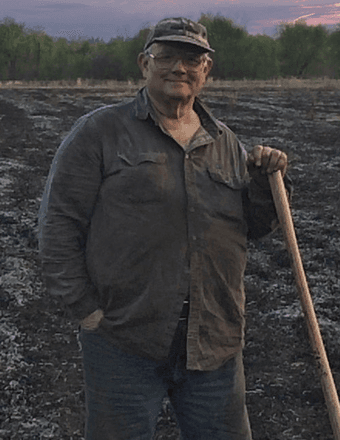
William Evert Gracey
November 13, 1940 - January 22, 2026
William Evert Gracey Obituary
William Evert Gracey
November 13, 1940 – January 22, 2026
William Evert Gracey, age 85, passed away on Thursday morning, January 22, 2026.
William was born on November 13, 1940, in the “Little House” on Cedar Ridge in Chesterfield, Illinois. He was the son of Evert and Hazel Gracey, and from the very beginning, his home at Cedar Ridge mattered deeply to him. The land, the water, the people, and the history beneath his feet all helped shape the man he would become.
He attended Keller School, a one-room schoolhouse in Chesterfield, before graduating from Carlinville High School. Much of his early education, however, happened well beyond the classroom. As a boy, Bill spent countless hours along the banks of Macoupin Creek—hunting, trapping, noodling for fish, swimming, and learning the quiet lessons that only God’s outdoors can teach. This creek remained special to him throughout his life, a place he carried in memory and returned to often in person and in spirit.
After high school, Bill made his way to St. Louis, following his faith journey and a path that he knew God was making for him. Before long, he was working and training as a machinist, serving his apprenticeship at Owens Illinois. He moved-on from there—working at The Measuregraph Company in St. Louis, and eventually the Shell Oil Refinery in Wood River—the place from where he retired. He took pride in honest work, in doing things correctly, and in solving problems with his hands. Even in retirement, that part of him never rested.
Bill was a natural tinkerer and inventor. There were few mechanical problems he could not reason through, and he delighted in studying the inventions of others. Inventors fascinated him—not for fame or recognition, but for the elegance of good ideas. That fascination fueled his own creativity and led to his most well-known invention, the Critter Skinner, an ingenious skinning machine for trappers and hunters. The Critter Skinner earned great respect among serious trappers, and was sold all over North America. Bill accepted that praise humbly, with the quiet satisfaction of someone who simply enjoyed solving a problem and making the world a better place.
Learning was one of the great, steady joys of Bill’s life. His kitchen table was almost always buried beneath stacks of books—sometimes two or three being read at once—covering subjects that ranged from science to religion, history to geography, and everything in between. He was a true Renaissance man--someone who worked with his hands for a living, but valued book learning as a natural companion to his practical sense.
Bill was also a serious collector of books, including many rare and valuable volumes, but he never believed books were meant to be protected from use. He believed they were meant to be read and shared. He regularly gave books away—sometimes rare ones—to anyone he thought might genuinely enjoy them. When someone hesitated because of a tattered binding, worried about damaging it, Bill would gently dismiss the concern with afamiliar line: “Don’t worry about that. It’s a book. It wants you to read it.”
His curiosity extended naturally into genealogy and history. Bill spent years researching family roots, traveling to learn more about those who came before him. His children learned early that family vacations might very well include stops at cemeteries, where they were cheerfully instructed to stand next to gravestones for photographs to be taken—holding 4x6 cards with dates and other pertinent information scrolled onto them. It was a source of good-natured teasing then, and a source of gratitude now.
Growing up on land rich with Native American history, Bill developed an early interest in Indian relics. He had a remarkable eye for finding them and a deep respect for the people who had lived on the land long before him.
Even late in life, walking the old farm, he retained an uncanny knack for spotting arrowheads and pieces of old pots that others would miss. He was especially proud of his friendship with Ken Farnsworth of the Illinois StateArchaeological Survey at the University of Illinois, who visited on several occasions to study Bills’s relics and incorporate that knowledge into the university’s records. Bill passed his entire collection on to his grandson,Samuel Nevlin, who shares his love of history and discovery.
Bill loved people. He truly never met a stranger. He had an instinctive ability to notice those who felt left out and to quietly include them into the conversation. His kitchen table became a gathering place—often crowded with books, coffee, and people—where long conversations and laughter unfolded naturally. Bible studies happened there too, always open, always welcoming and always questioning.
His Christian faith was central to his life. Bill was a devoted follower of Jesus Christ, not bound to any specific denomination, but deeply committed to living out his faith through kindness, humility, generosity, and love. He was the most nonjudgmental person many ever knew, and people sensed that immediately. They trusted him. They felt safe with him.
Generosity defined Bill’s life. He gave freely of his time, his skills, his resources, and himself. Many people later shared stories with his children—sometimes years later—about ways Bill had helped them: fixing something that couldn’t be fixed, offering quiet financial help, or simply showing up when someone needed support. He viewed the needs of others not as burdens, but as opportunities. Helping people wasn’t something he occasionally did; it was what he lived for.
In April of 1965, Bill married Ruth Jones. Together they built a family, welcoming their first son, Patrick, in 1968, followed by Ben and Nancy. Bill grew up in a world where work often came before everything else, and one of the driving forces in his life was making sure his children experienced opportunities he never had.
Whether or not he personally shared their interests never mattered to him—what mattered was encouraging them, supporting them, and taking joy in watching their lives unfold.
Though his marriage to Ruth ended in divorce, she—the mother of his children—remained the love of his life until the very end. One of Bill’s greatest joys was time spent with his family. He shared a unique bond with each of his children. He also shared a special bond with his grandson, Samuel. They delighted in impersonations, old sayings “from back in the day,” music at the piano, hunting stories, fishing and simply being together. Samuel memorized many of Bill’s old expressions, and those words—and the spirit behind them—will continue on.
Bill loved a good auction! Farm sales, sale barns, anywhere people gathered and you never quite knew what you might find—he loved the social atmosphere and the possibilities. He was known for coming home with the mostunexpected items, much to his family’s amusement. Those odd purchases often found their way into projects, inventions, or stories later, and the teasing was always part of the fun.
William is survived by his children Patrick Gracey, Benjamin Gracey, and Nancy Gracey; his grandson Samuel Nevlin; and his sister Frances Gracey. He was preceded in death by his parents Evert and Hazel Gracey, and his sisters Wilma Davis and Estella McCleery.
William Evert Gracey lived a life marked by faith, generosity, humility, kindness and curiosity. He worked with his hands, fed his mind, opened his heart, and made room for others wherever he went. His legacy lives on in the people he helped, the knowledge he shared, the family he loved, and the countless quiet moments of grace that defined his life.
Bill will be laid to rest near the site of the old Keller School, just steps from where his story began.
To send flowers to the family or plant a tree in memory of William, please visit our floral store.
William Evert Gracey
November 13, 1940 – January 22, 2026
William Evert Gracey, age 85, passed away on Thursday morning, January 22, 2026.
William was born on November 13, 1940, in the “Little House” on Cedar Ridge in Chesterfield, Illinois. He was the son of Evert and Hazel Gracey, and from the very be
Events
There are no events scheduled.
You can still show your support by sending flowers directly to the family, or plant a tree in memory of William Evert Gracey.Visit the Tribute Store